
Understanding the Hollow Earth Premise
Re-release Platform Parity and Steam Feature Set
The 2027 Clear River Games re-release marks the first official North American launch, arriving simultaneously on Switch, Switch 2, PS4, PS5, Xbox Series X|S, and PC via Steam (appid 4193690) and GOG. The Steam store page confirms Steam Achievements, Steam Cloud, and Family Sharing for the PC build, with supported languages EN/FR/DE/ES/JA. Physical copies are planned through Limited Run Games, while original artist Kamui Fujiwara contributes new official artwork for the Pixel Arcadia-announced edition.
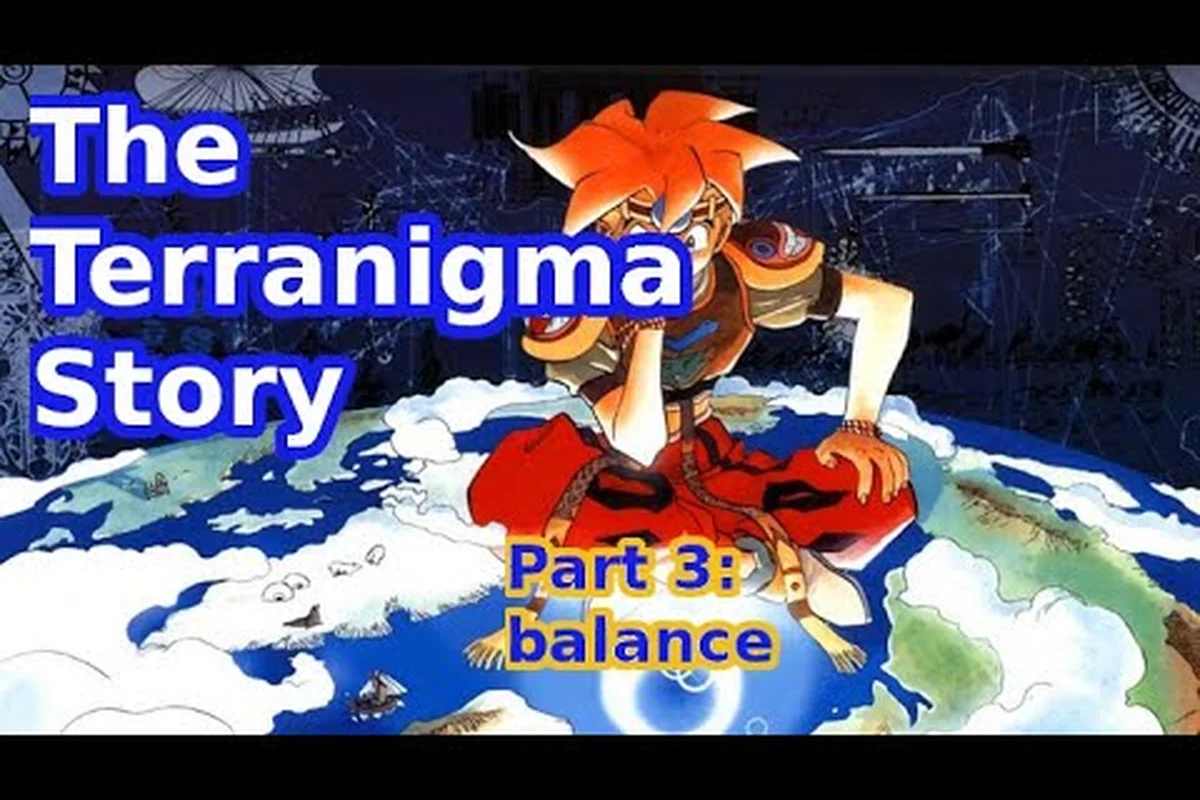
Terranigma story explained begins with a radical cosmological idea: the planet is not a solid sphere but a hollow shell containing two distinct surfaces. The external Lightside holds the world of growth, decay, and mortal life, while the internal Darkside preserves a frozen, artificial version of villages and people suspended in time. This setup matters because the entire narrative arc depends on the player accepting that resurrection, not creation, drives the plot forward.
The protagonist, Ark, lives in Crysta, a Darkside village sealed off from the surface. His daily life is ordinary until a forbidden door beckons him. The village elder warns against opening it, but Ark's curiosity overrides caution. What he finds inside is Pandora's Box, a container holding the sealed demon Yomi. Releasing Yomi sets every subsequent tragedy in motion, which makes the opening act a cautionary tale about disobedience with cosmic consequences.
According to the official Terranigma on Steam page, the game originally launched in Japan on October 20, 1995, developed by Quintet and published by Enix. It reached PAL regions in 1996 but never shipped to North America until the 2027 re-release, which explains why the narrative remained a cult favorite rather than a mainstream classic. The story's delayed Western availability only deepened the mystique around its philosophical ending.
| Realm | Location | Core Trait | Narrative Function |
|---|---|---|---|
| Darkside | Crysta and surrounding villages | Frozen, artificial, unchanging | Represents stasis and childhood |
| Lightside | Surface continents and oceans | Living, evolving, mortal | Represents growth and consequence |
| The Underworld | Beneath both surfaces | Spiritual, transitional | Houses souls between death and rebirth |
The Five Towers and Resurrection of the World
After Yomi escapes, the elder sends Ark on a mission that redefines the term "world-building." To restore the Lightside, Ark must activate five towers scattered across the resurrected continents. Each tower revives a specific layer of existence, which gives the terranigma plot guide its structural backbone. The order matters because later towers unlock only after earlier ones stabilize the surface.
The first tower revives plant life, carpeting barren continents with forests and grasslands. The second restores bird populations, reintroducing movement and sound to the silent world. The third brings back animal life, filling ecosystems with predators and prey. The fourth resurrects mankind, which introduces the most complicated layer because humans immediately begin building, warring, and reshaping the land. The final tower completes the soul cycle, linking the living world to the spiritual underworld.
Community data from the r/Terranigma subreddit consistently frames this sequence as a critique of progress. Players note that each resurrection makes the world more dynamic but also more dangerous, which suggests the game questions whether "restoration" is inherently good. The Asmodeus virus introduced later by the scientist Beruga becomes the dark mirror of Ark's life-giving mission: where Ark resurrects, Beruga seeks to purge.
| Tower | Layer Restored | Consequence |
|---|---|---|
| Tower 1 | Plants | Oxygen and soil stabilization |
| Tower 2 | Birds | Seed dispersal and insect control |
| Tower 3 | Animals | Ecosystem balance and predation |
| Tower 4 | Humans | Civilization, conflict, and industry |
| Tower 5 | Souls | Reincarnation cycle and spiritual continuity |
The Growth and Decline Theme
Terranigma's narrative structure leans heavily on the tension between growth and decline, a theme the game explores through Ark's dual role as both savior and destroyer. Every act of creation requires a corresponding act of destruction, which players experience directly when Ark must defeat the very lifeforms he resurrected to progress. The terranigma ark character guide reveals that Ark never escapes this paradox; he embodies it.
The hollow Earth premise allows the game to stage these conflicts simultaneously. While the Lightside evolves through natural selection and human ambition, the Darkside remains frozen as a museum of what the world once was. This contrast becomes emotionally resonant when Ark returns to Crysta and finds the villagers he grew up with still suspended in their daily routines, unaware of the cosmic drama unfolding above them.
Ark's Journey: From Village Boy to Cosmic Agent
A proper terranigma story summary must track Ark's transformation from an impulsive teenager into a figure of mythic consequence. His arc is unusual because he never becomes a traditional hero; instead, he becomes an agent of necessity, performing tasks that feel increasingly morally ambiguous. The village elder's guidance fades as Ark surpasses the limits of Darkside knowledge.
Ark's relationship with Elle, another Crysta resident, provides the emotional anchor for the story. Elle appears in Ark's dreams and across the resurrected world in various forms, which suggests she represents memory, continuity, or the soul of the planet itself. The terranigma ark character guide notes that Elle's presence in multiple eras hints at reincarnation mechanics that the game never fully explains, leaving room for interpretation.
The scientist Beruga emerges as Ark's philosophical opposite. Where Ark revives life, Beruga seeks to eliminate it through the Asmodeus virus, believing that humanity's growth has become a cancer on the planet. This conflict mirrors real-world debates about technology and environmental responsibility, which gives the narrative a surprisingly contemporary relevance despite its 1995 origins.
| Character | Role | Motivation | Arc Outcome |
|---|---|---|---|
| Ark | Protagonist | Obedience to elder, then self-discovery | Becomes cosmic agent of resurrection |
| Elle | Guide and anchor | Memory and continuity | Transcends individual identity |
| Yomi | Antagonist | Escape and domination | Released by Ark, defeated later |
| Beruga | Secondary antagonist | Purge humanity | Confronted in climactic conflict |
Why Crysta's Elder Sent Ark to the Towers
The Elder of Crysta functions as the classic narrative gatekeeper who warns against knowledge but cannot prevent its pursuit. His prohibition of the forbidden door creates the dramatic irony that drives the first act: the player knows Ark will open it because the game requires it. The elder's later guidance suggests he understood the necessity of Ark's transgression all along.
The Ending Explained: Sacrifice and Rebirth
Terranigma ending explained requires careful attention to what the game withholds as much as what it shows. The climax reveals that Ark's resurrection mission was never about restoring the old world but about preparing a new one. The souls he revived, including Elle, are not meant to return to their former lives but to inhabit a transformed existence.
The true ending meaning centers on sacrifice. Ark does not survive the final act, at least not in the form players have controlled throughout the game. His dissolution into the world he resurrected suggests that creation requires the creator to give something of themselves. This reading aligns with the game's title, which combines "terra" (earth) with "anima" (soul), implying that the planet's soul and Ark's soul become indistinguishable.
A terranigma ending analysis must acknowledge the ambiguity. Some players interpret Ark's fate as death; others see it as transcendence. The final scenes offer no clear answer, which is precisely the point. The game asks whether individual identity can survive the act of creating a world, and it refuses to provide comfort.
| Interpretation | Evidence | Player Consensus |
|---|---|---|
| Ark dies | He dissolves after final act | Most common reading |
| Ark transcends | He merges with planet soul | Popular among lore enthusiasts |
| Ark becomes Elle's dream | Dream sequences bookend the story | Minority but influential view |
| The cycle repeats | Yomi's release implies loop | Speculative interpretation |
The Yomi Question
Yomi's role in the ending remains contentious. Released in the first act and defeated in the last, Yomi represents the destructive impulse that Ark must integrate rather than eliminate. The terranigma ending analysis suggests that Yomi is not an external enemy but a part of the world's cycle, which explains why defeating him does not feel like victory in the traditional sense. Further exploration of how Ark’s choices shape this cyclical role—especially his transition from unwitting pawn to conscious world-bearer—can be found in the Terranigma Ark Story Role analysis, which clarifies why his final act feels less like triumph and more like a return to the source.
The 2027 Re-release and Story Preservation
The story's themes have gained new relevance with the upcoming re-release. According to the Siliconera announcement, Clear River Games is publishing Terranigma for Switch, Switch 2, PS5, Xbox Series X, and PC in early 2027. This marks the first official North American release in the game's history, which means a new audience will encounter the story without the nostalgia filter that shaped its original reception.
The re-release's importance for story analysis cannot be overstated. Original artist Kamui Fujiwara is involved and will create new official artwork, which may clarify visual ambiguities that fueled decades of fan debate. The game's official Steam page confirms support for English, French, German, Spanish, and Japanese, making the narrative accessible to a broader audience than the original PAL-only English release.
| Platform | Release Status | Story Impact |
|---|---|---|
| Switch / Switch 2 | Early 2027 | New players access full narrative |
| PS5 / Xbox Series X | Early 2027 | First console release outside PAL |
| PC (Steam / GOG) | Early 2027 | Modding potential for lore research |
| Original SNES | 1995 JP / 1996 PAL | Cult classic foundation |
Frequently Asked Questions
Is Terranigma connected to Soul Blazer and Illusion of Gaia?
The three games form a loose thematic trilogy called the Quintet Trilogy, but they do not share a direct narrative continuity. Each explores similar themes of resurrection, growth, and consequence through different protagonists and worlds. Players can enjoy Terranigma without playing the other two, though the thematic echoes enrich the experience.
What does the title Terranigma mean?
The title combines "terra" (earth) with "anima" (soul), suggesting "soul of the earth." This naming reflects the story's core premise that the planet possesses a spiritual dimension accessible through Ark's resurrection mission. The Japanese title Tenchi Sōzō translates roughly to "Creation of Heaven and Earth," which emphasizes the cosmological scope.
Why did Terranigma never release in North America originally?
Enix closed its US subsidiary before the game could be localized, which prevented the North American launch. The PAL version came through Nintendo in 1996, creating a three-decade gap before the 2027 re-release. This delay shaped the game's reputation as a hidden gem discovered through emulation and import copies.
What is the Asmodeus virus?
The Asmodeus virus is a weapon developed by the scientist Beruga to eliminate humanity, which he views as a destructive force on the planet. The virus appears in the late-game conflict as the dark counterpart to Ark's life-giving mission. Its inclusion reinforces the game's central question about whether human progress justifies environmental cost.
Does Ark survive the ending?
The game intentionally leaves this ambiguous. The most common reading is that Ark dissolves into the world he resurrected, sacrificing his individual identity to complete the cycle. Other interpretations suggest transcendence or a dream-loop structure. The ambiguity is deliberate, inviting players to reflect on what creation demands from its agents.