
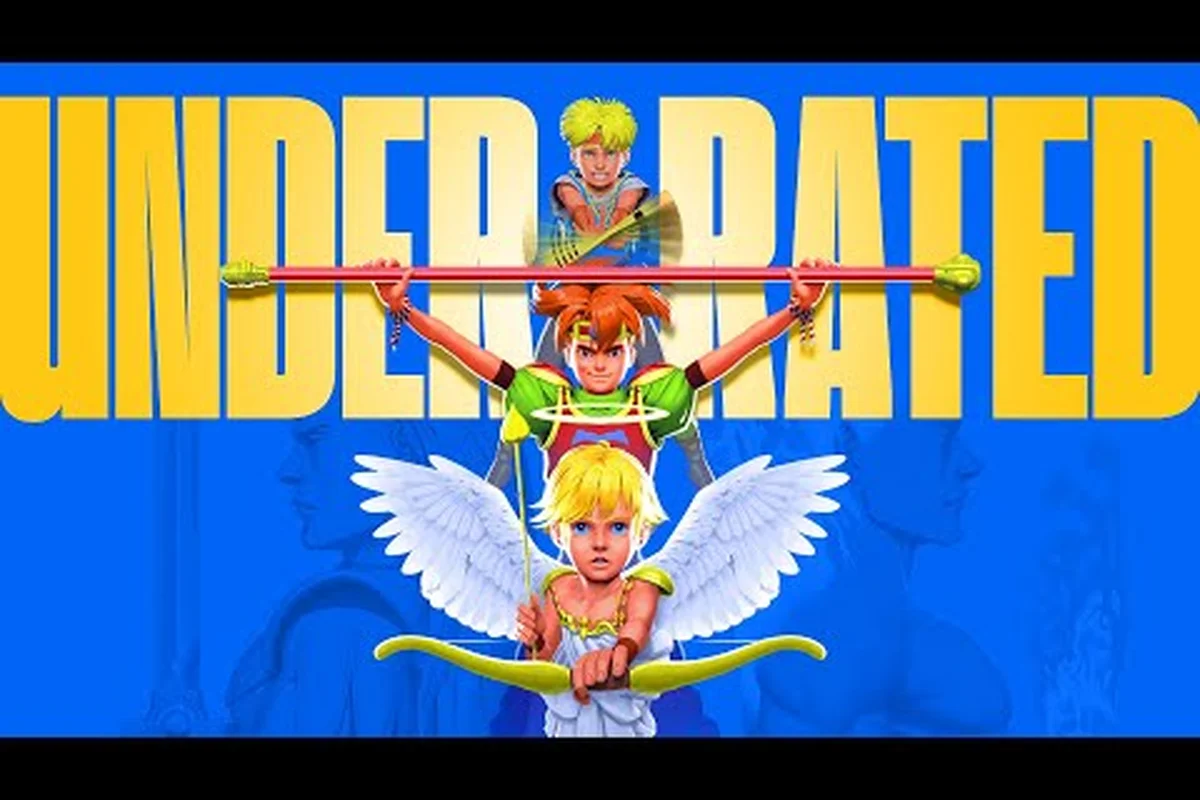
Few Super Nintendo role-playing games carry the narrative weight of Quintet's 1995 action RPG, yet the terranigma quintet creation trilogy remains one of the most misunderstood topics in retro gaming circles. Understanding how Soul Blazer, Illusion of Gaia, and Terranigma form a loose thematic trilogy transforms how you experience Ark's journey from Crysta to the resurrection of Earth's surface. This guide unpacks the narrative threads, thematic echoes, and the emotional ending that players still discuss decades later. If you want a deeper look at the philosophical and symbolic layers beneath that ending, see our Terranigma Story Explained companion piece, which decodes the resurrection sequence and Ark’s final sacrifice in detail.
The Quintet Creation Trilogy Framework
| Release detail | Value |
|---|---|
| Original JP release date | 1995-10-20 |
| Original JP publisher | Enix |
| Original JP platform | Super Famicom |
| PAL release year | 1996 |
| PAL publisher | Nintendo |
| NA original release | Never released (Enix US subsidiary closed) |
| 2027 re-release PC appid | 4193690 |
Quintet's three flagship Super Nintendo titles are often called the creation trilogy because they share a core preoccupation with restoration, divine intervention, and human responsibility. Although the games do not share characters or a continuous timeline, they explore overlapping philosophical territory through distinct mechanical lenses. Soul Blazer tasks players with liberating souls trapped by a demonic force, Illusion of Gaia shifts toward environmental and cultural restoration, while Terranigma pushes the premise to its logical extreme by making the protagonist directly responsible for resurrecting plants, animals, birds, and eventually humanity itself.
The term terranigma quintet creation trilogy does not appear in official Quintet documentation, which means community discussion largely drives the framing. Players and retro game historians use the label to group the three titles based on their shared developer lineage and thematic concerns. According to community data gathered from player discussions, the trilogy label helps newcomers understand why Terranigma feels narratively denser than its peers, even though each game stands alone mechanically.
The connection is easiest to see in the resurrection mechanics. In Soul Blazer, defeating monster lairs restores villages and NPCs to the world. In Terranigma, Ark's tower-climbing sequences revive continents one by one, and the five towers sequence operates as a direct spiritual successor to Soul Blazer's room-by-room restoration loop. The act of creation is not passive; the player must actively fight to bring life back, which gives the trilogy its thematic throughline.
What separates Terranigma from its predecessors is scale. Soul Blazer and Illusion of Gaia operate within bounded, largely local restorations, while Terranigma expands the concept to planetary scope. The internal Darkside and external Lightside structure—confirmed by the official Steam store page—creates a literal dual-world system where the protagonist must revive the surface before exploring it. This structural ambition is why many fans argue the terranigma quintet creation trilogy culminates in the strongest narrative statement of the three games.
| Title | Release Year (Japan) | Core Restoration Mechanic | Narrative Scope |
|---|---|---|---|
| Soul Blazer | 1992 | Freeing trapped souls from monster lairs | Local villages and kingdoms |
| Illusion of Gaia | 1993 | Rebuilding cultural landmarks and ecosystems | Regional continents |
| Terranigma | 1995 | Reviving plants, animals, birds, and humanity via towers | Entire planet, dual worlds |
The table above shows how each entry escalates the restoration premise. Community reports suggest that players who complete all three games often describe Terranigma as the most emotionally resonant, largely because the narrative refuses to offer an uncomplicated happy ending.
Soul Blazer Connection and Shared DNA
The terranigma soul blazer connection runs deeper than surface-level mechanical echoes, because both games share the same director, Tomoyoshi Miyazaki, and the same development house. Quintet's house style—top-down action combat, dialogue-driven NPC restoration, and a melancholy tone—carries across both titles with remarkable consistency. Players who recognize the sword charge attack timing from Soul Blazer will find Terranigma's spear-based combat familiar, even though the latter adds jumping and a more fluid movement system.
Thematically, Soul Blazer establishes a pattern that Terranigma later subverts. In Soul Blazer, the protagonist is an unambiguous hero sent by a divine master to fix a broken world, and the restoration is framed as an unqualified good. Terranigma complicates this moral clarity. Ark opens a forbidden door, releases the demon Yomi, and spends much of the game wrestling with whether his acts of creation are actually justified. The forbidden door sequence is the narrative hinge where Terranigma diverges from Soul Blazer's cleaner heroic framework.
Mechanically, both games gate progression behind restoration milestones. Soul Blazer requires clearing lairs to unlock new areas, while Terranigma requires reviving specific life forms before certain NPCs or routes become available. The loop of "defeat enemies, restore world, unlock path" is the clearest structural inheritance from Soul Blazer, and it is likely why fans group them so tightly under the creation trilogy umbrella.
The Illusion of Gaia Bridge
Illusion of Gaia occupies the middle position in the trilogy and acts as a thematic bridge between Soul Blazer's straightforward restoration and Terranigma's morally ambiguous creation. Its protagonist, Will, restores cultural sites and environmental features, but the game introduces the idea that restoration has unintended consequences. This foreshadows Terranigma's later exploration of whether resurrecting humanity is a gift or a curse.
What the middle title contributes to the creation trilogy is the notion of transformation. Will's world changes as he progresses, with NPCs reacting to his restorations in ways that complicate the player's sense of accomplishment. Terranigma inherits this narrative friction and amplifies it, particularly in the back half of the game where Ark confronts the scientist Beruga and the devastating Asmodeus virus outbreak.
Players who jump straight into Terranigma without playing Illusion of Gaia often miss the subtle narrative echoes, such as the recurring motif of a protagonist who is both creator and destroyer. The trilogy framework helps contextualize these echoes as intentional design choices rather than coincidence, which is why the terranigma quintet creation trilogy label persists in community discussions.
ActRaiser Connection and Thematic Overlap
The terranigma actraiser connection is less direct than the Soul Blazer link, but it is essential for understanding Quintet's broader creative project. ActRaiser, released in 1990, is the studio's earliest action-simulation hybrid and establishes the divine-creation fantasy that later titles explore through different mechanical lenses. In ActRaiser, players control a god who alternates between side-scrolling action stages and civilization-building simulation segments, literally nurturing human settlements from scratch.
Terranigma does not share ActRaiser's simulation mechanics, but the thematic resonance is unmistakable. Both games position the player as a divine agent responsible for guiding humanity from nothing to civilization. ActRaiser's god clears monsters and guides settlements, while Terranigma's Ark revives life forms in a specific order—plants first, then animals, then birds, then humans—mirroring the creation sequence found in many mythologies. The creation order in Terranigma is not arbitrary; it follows a deliberate progression that echoes ActRaiser's own step-by-step civilization building.
Story Comparison: Terranigma vs ActRaiser
When players compare terranigma story vs actraiser, the most significant difference is narrative tone. ActRaiser frames divine creation as fundamentally benevolent and rewarding. The god figure is distant but caring, and humanity's growth is presented as a straightforward triumph. Terranigma complicates this by making the protagonist a mortal boy, not a god, and by introducing moral consequences for every act of creation.
| Narrative Element | ActRaiser | Terranigma |
|---|---|---|
| Protagonist | Divine being | Mortal boy named Ark |
| Creation Framing | Benevolent, unambiguous | Morally complex, consequential |
| Antagonist | Tanzra and demonic forces | Yomi, Beruga, and systemic threats |
| Ending Tone | Triumphant restoration | Bittersweet, existential |
| Player Role | Guiding god | Reluctant creator |
The table above illustrates why terranigma story vs actraiser comparisons often conclude that Terranigma is the more narratively sophisticated title. ActRaiser's straightforward divine fantasy gives way to Terranigma's existential questioning, which is precisely why many fans consider Terranigma the best story SNES RPG.
The actraiser connection also surfaces in the music and visual presentation. Both games share composer Yuzo Koshiro's melodic sensibility, though Terranigma's soundtrack is generally regarded as the more emotionally complex work. Community discussions frequently cite the ending theme as one of the most affecting pieces of Super Nintendo music, which ties directly into the emotional ending that anchors the entire narrative experience.
Why Terranigma Has the Best Story Among SNES RPGs
The claim that Terranigma is the best story SNES RPG rests on three pillars: narrative structure, thematic depth, and emotional payoff. The game opens with a small-scale mystery—a forbidden door in a quiet village—and gradually expands to planetary scope, which gives the story a momentum that many 16-bit RPGs lack. Where contemporaries like Final Fantasy VI or Chrono Trigger build ensemble casts, Terranigma focuses almost entirely on Ark's solitary journey, which creates an intimate connection between player and protagonist.
Narrative Structure and Pacing
The story unfolds in distinct phases that mirror the creation process itself. The first phase establishes Crysta and the Darkside village's isolation. The second phase introduces the resurrection quest, sending Ark across five towers to revive continents. The third phase shifts to the Lightside, where Ark must interact with the humanity he helped create. The final phase pivots into moral complexity, with Beruga's Asmodeus virus forcing Ark to confront whether resurrection was the right choice.
This structural clarity is rare in Super Nintendo RPGs, many of which lose narrative focus in their middle sections. Terranigma maintains thematic coherence throughout because every mechanical action—reviving a plant, freeing an animal, awakening a human—reinforces the central creation fantasy. The resurrection progression is not just a gameplay loop; it is the story.
The Emotional Ending and Its Legacy
The terranigma emotional ending is the primary reason the game retains such a devoted following. Without spoiling specific plot beats, the ending reframes the entire journey, asking players to reconsider whether Ark's actions were heroic, tragic, or something in between. The final sequence uses dreamlike imagery and a quiet, reflective tone that contrasts sharply with the action-heavy middle sections.
Community reports consistently cite the ending as a formative gaming memory. Players who completed the game in the 1990s often describe the final moments as among the most affecting they have experienced in the medium. The ending's power comes from its restraint—it does not overexplain or moralize, but instead leaves space for interpretation, which is why discussions about the true meaning of the ending remain active in community spaces decades later.
The ending theme composition deserves specific mention. The music during the final sequence shifts from the game's typical adventurous mode into something elegiac, reinforcing the narrative's emotional weight. This integration of music and story is a hallmark of Quintet's best work and a major reason why Terranigma stands apart from its trilogy siblings.
Community Interpretations and Legacy
The terranigma quintet creation trilogy has inspired decades of community analysis, with players debating everything from the precise meaning of the ending to the nature of Ark's relationship with the world he creates. These interpretations are not mere trivia; they actively shape how new players approach the game. Understanding the dominant interpretive frameworks helps players appreciate narrative details they might otherwise miss.
Dominant Interpretive Frameworks
One common reading positions Terranigma as a meditation on responsibility and unintended consequences. Ark's creation acts are never neutral, and the game consistently shows that bringing life into the world also brings suffering. The Asmodeus virus sequence is the clearest example: humanity's resurrection enables Beruga's apocalyptic plan, making Ark complicit in the catastrophe he inadvertently facilitated.
Another framework reads the game as an allegory for environmental stewardship. The specific order of resurrection—plants, animals, birds, humans—mirrors ecological succession, and the game's emphasis on balance between Lightside and Darkside suggests a holistic view of natural systems. Players who approach the game with this lens often find the ending's ambiguity more meaningful, as it refuses to offer a simple "nature wins" resolution.
A third interpretation focuses on the game's treatment of mortality and loss. Several characters Ark meets during his journey do not survive to the ending, and the game does not shy away from grief. The emotional ending resonates because it acknowledges that creation and loss are inseparable, which is a more mature thematic statement than most 16-bit RPGs attempt.
Player Community Data
According to community data gathered from player discussions, the ending sequence generates more sustained conversation than any other element of the game. Players frequently describe the final hours as emotionally draining in a way that few retro titles achieve. The ending analysis threads in community spaces often run to hundreds of comments, with participants debating the implications of specific imagery and dialogue choices.
This sustained engagement is a strong indicator of narrative quality. Games with forgettable stories do not inspire decades of interpretation, but Terranigma continues to attract new analysis because its themes remain relevant. The upcoming re-release, announced in August 2026 and covered by outlets like Siliconera, will likely introduce the game to a new generation of players who will add their own interpretations to the ongoing conversation.
Frequently Asked Questions
Is the Terranigma quintet creation trilogy an official label?
The label is a community construction rather than official Quintet terminology. Players and retro game historians use it to group Soul Blazer, Illusion of Gaia, and Terranigma based on shared developer lineage, thematic concerns, and restoration mechanics. No official documentation from Quintet or Enix uses the exact phrase.
What is the strongest connection between Soul Blazer and Terranigma?
The strongest connection is the restoration loop, where defeating enemies revives parts of the world. Soul Blazer frees trapped souls from monster lairs, while Terranigma revives plants, animals, birds, and humans through tower sequences. Both games share director Tomoyoshi Miyazaki and Quintet's distinctive melancholy tone.
How does Terranigma's story compare to ActRaiser?
Terranigma and ActRaiser both explore divine creation, but Terranigma is far more morally complex. ActRaiser frames creation as unambiguous good, while Terranigma shows that resurrection has unintended consequences, particularly when Beruga unleashes the Asmodeus virus. Terranigma's mortal protagonist and bittersweet ending mark a significant narrative evolution.
Why do fans consider Terranigma's ending so emotional?
The ending is emotionally powerful because it reframes the entire journey, asking players to reconsider whether Ark's actions were heroic or tragic. The restrained, dreamlike presentation and the elegiac ending theme create space for interpretation rather than offering easy answers. This ambiguity has sustained decades of community discussion.
Is Terranigma the best story among SNES RPGs?
Many fans argue yes, citing Ark's solitary journey, moral weight, and devastating ending as deeper than Final Fantasy VI or Chrono Trigger. The Quintet creation trilogy framework — Soul Blazer's rebirth cycle, ActRaiser's divine oversight, Terranigma's existential cost — makes its narrative payoff uniquely earned. The 2027 re-release lets new players judge.