
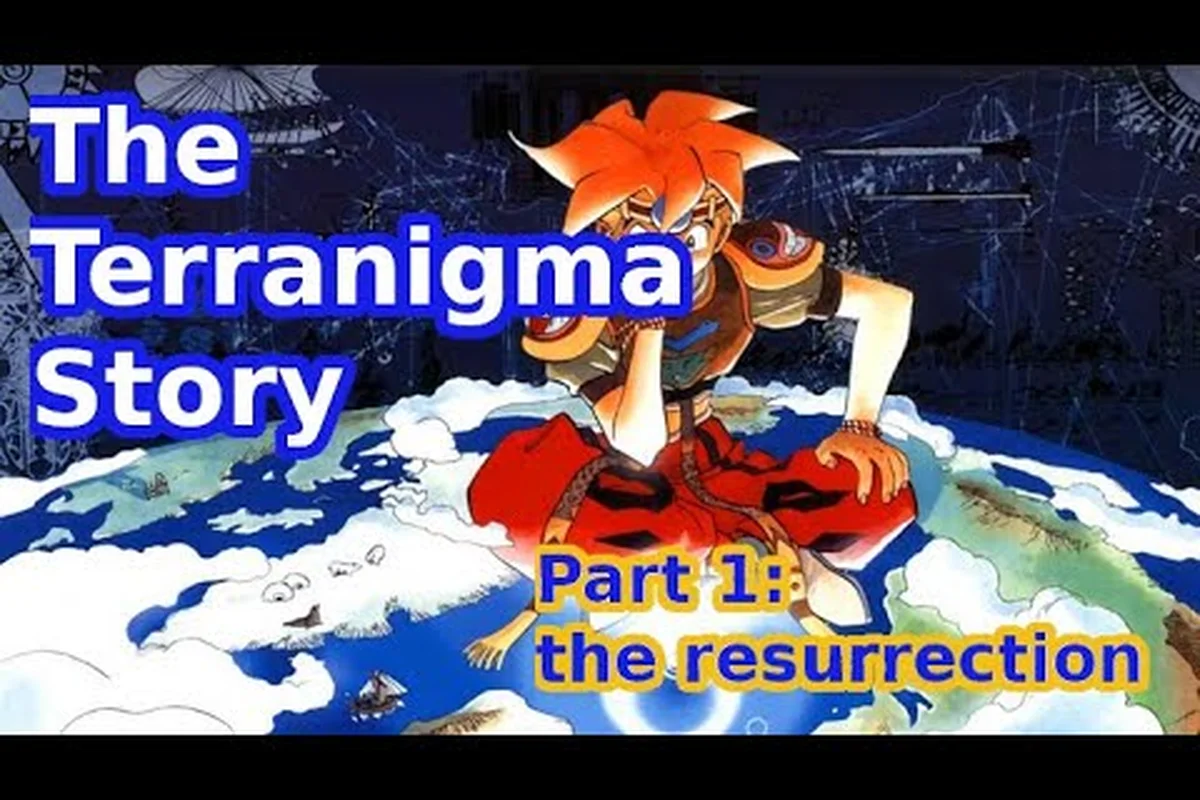
Understanding the Terranigma Ark story role matters because every major event in this 1995 Quintet action RPG flows through one impulsive decision made in the village of Crysta. Ark opens a forbidden door, releases the demon Yomi, and then spends the rest of the game trying to repair a world he barely understood. His journey from reckless teenager to silent creator is the emotional engine that drives all five acts, and it only works because of the people around him—especially Elle, the Elder, and the scientist Beruga. If you’re still piecing together how Ark’s choices ripple across the game’s major turning points, our Terranigma Story Explained breakdown walks through the full arc from Crysta to the final confrontation.
Ark's Foundational Role in Crysta's Hidden Structure
The Terranigma Ark story role begins long before the player takes control, rooted in the strange social order of the Darkside village of Crysta. According to the official Steam store page, the Earth is a hollow sphere with an external Lightside and an internal Darkside, and Ark lives in that internal world without knowing what lies beyond. His village operates under strict rules enforced by the Elder of Crysta, who forbids anyone from entering a specific room in the basement. Ark's entire early identity is shaped by this prohibition because he is naturally curious, physically capable, and surrounded by peers who egg him on rather than hold him back.
The game establishes three core facts about Ark within the first hour that define his narrative function. First, he is an orphan raised communally, which means he has no parental figure to explain the deeper history of Crysta. Second, he is the strongest fighter among the village youths, a trait that gives him the confidence to break rules but also makes him the only person capable of surviving what comes next. Third, his relationship with Elle is already intimate and emotionally charged, which provides the personal stakes that carry the story through its darkest turns.
| Story Element | How It Shapes Ark | Narrative Consequence |
|---|---|---|
| Forbidden door in Crysta | Triggers his curiosity and rebellion | Releases Yomi, freezes the village |
| Communal upbringing | No direct parental guidance | He relies on the Elder's cryptic warnings |
| Physical strength | Allows survival outside Crysta | He becomes the de facto hero by necessity |
| Bond with Elle | Gives him an emotional anchor | Her loss drives his resurrection quest |
| The Elder's silence | Creates mystery and mistrust | Ark acts without full information |
The opening sequence is deliberately uncomfortable because the player knows Ark is making a mistake, yet the game forces the action forward. Community discussions on the Terranigma subreddit frequently highlight this as one of the most effective narrative hooks in the genre—the hero causes the catastrophe, and the entire story is about accountability rather than external villainy. Ark's role is therefore not that of a chosen one in the traditional sense, but of a repairer of self-inflicted damage.
The Elder of Crysta and the Weight of Forbidden Knowledge
The Elder of Crysta functions as the story's first authority figure, but his role is far more ambiguous than a typical mentor archetype. He knows about the forbidden door, understands the true nature of the Darkside, and has likely witnessed previous cycles of creation and destruction. His decision to keep Ark in the dark about these matters directly contributes to the disaster because a teenager denied explanation will often seek it through transgression.
Players report that the Elder's dialogue in the early hours is intentionally frustrating—he speaks in warnings without substance, demands obedience without justification, and offers no path for Ark to satisfy his natural curiosity safely. This creates a generational conflict that resonates beyond the fantasy setting. The Elder represents institutional caution, while Ark embodies youthful urgency, and the game refuses to present either as entirely correct.
The Elder's Warnings and Their Deeper Meaning
Each of the Elder's major statements carries a double meaning that becomes clear only on a second playthrough. When he says the door must remain closed, he is not simply enforcing a rule—he is trying to prevent the release of Yomi and the subsequent freezing of Crysta's inhabitants. When he speaks of the Lightside as a place of danger, he is preparing Ark for the psychological shock of discovering that the surface world is empty and waiting to be resurrected.
The tragedy of the Elder is that his knowledge is incomplete. He understands the danger of the door but not the necessity of what lies beyond it. The resurrection quest that defines the Terranigma Ark story role requires someone to open that door eventually—the Elder's prohibition was always doomed to fail because the world's restoration depends on breaking the seal. This tension between preservation and creation is one of the game's central themes, and the Elder embodies its conservative pole.
Elle as Ark's Emotional Compass and Narrative Catalyst
No discussion of the Terranigma Ark story role is complete without examining Elle, because she transforms Ark from a rule-breaking teenager into a driven protagonist. The Terranigma Elle and Ark relationship is established through small, intimate moments rather than grand declarations—shared chores, quiet conversations, and a mutual understanding that neither fully articulates. When Elle is frozen along with the rest of Crysta after Yomi's release, Ark's motivation shifts from curiosity to rescue, and this emotional foundation carries the player through the game's most mechanically demanding sections.
The Terranigma Elle character guide reveals a figure who is both victim and catalyst. Elle is not a fighter, not a strategist, and not a source of exposition—her narrative function is to be the person Ark cannot afford to lose. This makes her eventual fate in the later acts devastating precisely because the player has spent hours fighting to reach her. The game refuses to give Ark and Elle a simple reunion, instead complicating their relationship through memory, loss, and the question of whether the resurrected Elle is truly the same person Ark remembers.
Key Moments in the Elle-Ark Bond
| Act | Relationship Moment | Emotional Impact |
|---|---|---|
| Crysta (Act 1) | Elle encourages Ark's curiosity, then freezes | Establishes guilt as primary motivation |
| Resurrection (Acts 2-4) | Ark revives life while Elle remains frozen | Creates dramatic irony and urgency |
| Surface World (Act 5) | Reunion complicated by memory and identity | Questions the nature of self and love |
| Ending | Final separation or union depending on interpretation | Leaves the relationship ambiguous and resonant |
Community interpretations of the ending vary widely, but players consistently report that the Terranigma Elle and Ark relationship is what makes the conclusion emotionally effective rather than merely symbolic. Without Elle, Ark's resurrection of continents would feel like a checklist; with her, every restored forest and awakened bird carries the implicit question of whether he will ever see her smile again.
Beruga's Plan and the Corruption of Creation
The antagonist Beruga represents the dark mirror of Ark's creative power. Where Ark resurrects life through the five towers, Beruga seeks to control it through technology, and his methods reveal the game's deepest philosophical concerns. A complete Terranigma Beruga character guide must acknowledge that he is not simply evil for its own sake—he genuinely believes that humanity's flaws justify radical intervention, and his plan emerges from a coherent, if horrifying, worldview.
The Terranigma Beruga plan explained centers on the Asmodeus virus, a biological weapon designed to eliminate those Beruga deems unworthy of survival. He presents this as purification, a way to create a perfect world free from suffering and conflict. The parallels to 20th-century eugenics are deliberate and uncomfortable, and the game refuses to soften the comparison. Ark's confrontation with Beruga forces the player to consider whether creation without freedom is meaningful, and whether a perfect world populated by compliant survivors is worth the cost.
Beruga's Ideology vs. Ark's Actions
| Philosophical Axis | Beruga | Ark |
|---|---|---|
| View of humanity | Flawed, needs correction | Imperfect, worth preserving |
| Method | Technological control | Organic resurrection |
| Goal | Perfection through elimination | Restoration through growth |
| Relationship to death | Weaponizes it | Reverses it |
| Ultimate outcome | Defeat and rejection | Ambiguous transcendence |
The conflict between Ark and Beruga is not a simple battle between good and evil, but a clash between two visions of what the resurrected world should become. Ark restores life without dictating how it should be lived, while Beruga seeks to impose his judgment on every creature. The game's decision to make Ark's victory a rejection of Beruga's philosophy rather than a mere physical triumph is central to understanding the Terranigma Ark story role as a moral argument, not just a hero's journey.
The Five-Act Structure and Ark's Transformation
The resurrection quest that defines Ark's journey unfolds across five distinct acts, each pushing him further from the person he was in Crysta. The Terranigma Ark story role evolves from reluctant fixer to active creator to something beyond human comprehension, and tracking this transformation reveals the game's careful narrative architecture. According to the Terranigma Wikipedia entry, the game documents Ark's progression from opening the forbidden door to resurrecting continents, reviving plants and animals, and ultimately facing the consequences of his creative power.
Act One establishes Ark as a rule-breaker whose curiosity causes catastrophe. Act Two transforms him into a world-builder, tasked with resurrecting the surface continents through the five towers. Act Three deepens this role by requiring him to revive plants, birds, and animals, shifting his focus from geography to ecology. Act Four introduces human civilization and the complications that come with it, while Act Five confronts him with Beruga's plan and the ultimate question of what his creation has become.
Act-by-Act Evolution of Ark's Agency
| Act | Primary Action | Ark's Psychological State | Key Relationship |
|---|---|---|---|
| 1: Crysta | Opens forbidden door, releases Yomi | Guilty, confused, desperate | Elle (frozen) |
| 2: Continents | Resurrects surface landmasses | Purposeful, determined | The Elder (distant) |
| 3: Life | Revives plants and animals | Awe, growing detachment | Nature itself |
| 4: Humanity | Restores civilization | Ambivalence, weariness | Various human communities |
| 5: Confrontation | Faces Beruga and Yomi | Resigned, transcendent | Elle, Beruga, the world |
Each act strips away another layer of Ark's original identity. By the end, the boy who broke a rule in Crysta has become something closer to a deity, and the game asks whether that transformation is a triumph or a tragedy. Players who engage deeply with the Terranigma Steam page will find that the official description emphasizes the hollow Earth structure and the protagonist's journey from Darkside to Lightside, but the emotional weight comes from what Ark loses along the way.
Character Interactions That Define the Narrative
The supporting cast in Terranigma is deliberately sparse, which makes each interaction carry disproportionate weight. The Elder of Crysta appears primarily in the early game, but his warnings echo throughout the entire story. Elle is physically absent for most of the game, yet her frozen presence in Crysta drives every decision Ark makes. Even Beruga, who appears relatively late, reframes everything the player has done up to that point.
This economy of character is a deliberate design choice. By limiting the number of meaningful relationships, the game forces the player to invest deeply in the few that exist. The Terranigma Ark story role would not function with a larger cast because the story depends on the intensity of Ark's connection to a handful of figures rather than the breadth of a sprawling ensemble. Every character either motivates Ark, opposes him, or complicates his understanding of what he is doing.
The Terranigma Elle character guide and Terranigma Beruga character guide together reveal the story's thematic range. Elle represents love, memory, and the personal stakes of creation. Beruga represents control, ideology, and the danger of treating humanity as a problem to be solved. Ark stands between them, neither fully romantic hero nor fully abstract creator, and his struggle to reconcile these positions gives the narrative its distinctive tone.
Frequently Asked Questions
What is the Terranigma Ark story role in simple terms?
Ark is the protagonist who accidentally releases a demon from a forbidden door in his village, then spends the rest of the game resurrecting the surface world's continents, plants, animals, and humans. His role shifts from rule-breaker to creator, and the story examines the emotional cost of that transformation through his relationships with Elle and the Elder.
How does the Elder of Crysta influence Ark's decisions?
The Elder forbids Ark from opening the basement door, but his warnings lack explanation, which pushes Ark toward transgression. This creates the story's central conflict between institutional caution and youthful urgency. The Elder's knowledge is incomplete—he understands the danger but not the necessity of what lies beyond the door.
What makes the Elle and Ark relationship central to the story?
Elle is Ark's emotional anchor, and her freezing after Yomi's release transforms his motivation from curiosity to rescue. Their relationship gives the resurrection quest personal stakes, and the game complicates it in the later acts by questioning whether the resurrected Elle is the same person Ark remembers.
Why does Beruga unleash the Asmodeus virus?
Beruga believes humanity's flaws justify radical intervention, and the virus is his method of eliminating those he considers unworthy. His plan is presented as purification, not simple villainy, and it forces Ark to reject the idea that a perfect world can be created through control and elimination.
Does Ark's story have a definitive happy ending?
No. The ending is deliberately ambiguous — after Ark defeats Beruga and confronts Dark Gaia, the final dream sequence leaves his fate and Elle's connection open to interpretation. Players debate whether it is hopeful or tragic, which is why the subreddit hosts ongoing ending-analysis threads.