
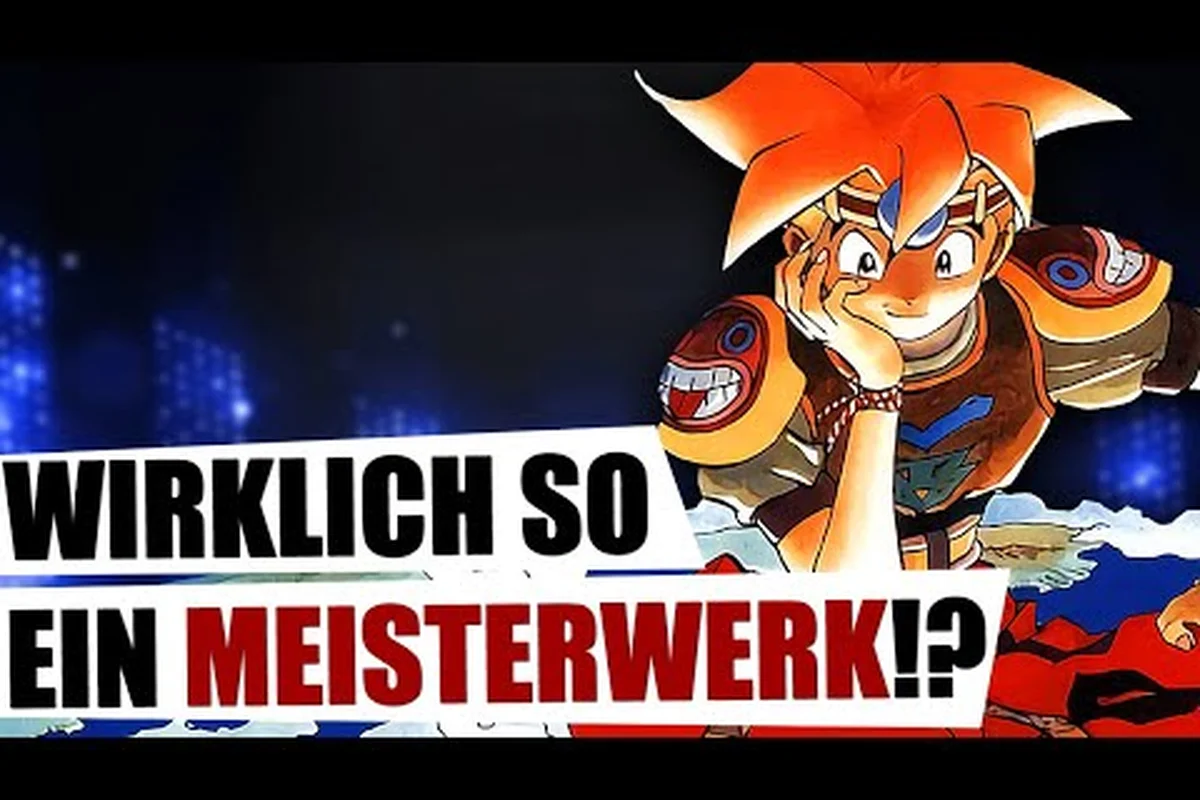
The 2027 re-release of Terranigma has reignited a thirty-year-old debate about pixel art preservation. A proper terranigma graphics comparison matters now more than ever because the new Steam and console ports are the first official English-language releases in North America, and players want to know whether the visual soul of Quintet's 1995 classic survived the transition. With the review embargo lifting alongside the launch window, early critic reactions and a wave of terranigma youtube videos are providing the first unfiltered look at how the SNES original stacks up against modern displays. If you are deciding between dusting off an emulator or buying the new version, understanding exactly what changed visually will save you from a purchase you might regret.
Understanding the Terranigma Graphics Comparison Baseline
Any meaningful terranigma graphics comparison has to start with what made the 1995 original visually distinctive in the first place. Quintet's artists worked within the Super Nintendo's Mode 7 scaling capabilities and a limited color palette, yet they produced environments that felt geographically coherent. The overworld map, which transitions from a hollow Darkside interior to a resurrected Lightside surface, relied on layered tile sets and carefully managed sprite priority to sell the illusion of depth. Because the original game never launched in North America, many players experienced it through emulators that introduced their own scaling artifacts, which complicates any clean visual benchmark. According to the official Steam store page for the 2027 release, the new version preserves Kamui Fujiwara's original character designs while presenting them at higher output resolutions, though the underlying pixel grid remains intact.
The technical foundation of the SNES version is worth breaking down before evaluating the new port. The original hardware pushed a 256×224 internal resolution through analog CRT displays, where scanlines and phosphor bloom naturally softened hard pixel edges. Emulator footage captured at raw pixel output looks dramatically sharper, and often harsher, than what players actually saw on period-appropriate televisions. This gap between raw pixels and intended presentation is the single biggest source of confusion in community discussions about whether the re-release looks "authentic."
| Visual Element | SNES Original (1995) | 2027 Re-Release (Steam/Switch) |
|---|---|---|
| Internal resolution | 256×224, CRT-scaled | Pixel grid preserved, high-res output |
| Color depth | 15-bit RGB, 32,768 colors | Expanded display gamut, same asset palette |
| Character sprites | Original Fujiwara designs | Re-rendered at native sprite resolution |
| Background layers | Mode 7 + tile priority | Emulated Mode 7 with optional smoothing |
| Aspect ratio | 4:3 on CRT | 16:9 with border options or pixel-perfect 4:3 |
| Filter options | None (hardware dependent) | Scanline, CRT, sharp pixel modes |
The most important takeaway from this baseline is that the 2027 port does not appear to be a full remake. Community reports describe it as a faithful pixel art restoration with modern output options, which means the terranigma graphics comparison ultimately hinges on presentation choices rather than redrawn assets. Players who expected an HD-2D overhaul similar to recent Square Enix projects will need to adjust those expectations before launch.
What the Steam Store Page Reveals About Visual Changes
The Terranigma Steam page serves as the primary authoritative source for what the 2027 release actually includes. The page confirms Steam Achievements, Steam Cloud support, Family Sharing, and single-player mode, but the visual details require reading between the lines of the listed tags. The game is tagged with Pixel Graphics, Retro, Action RPG, and JRPG, which strongly suggests the developers prioritized authenticity over modernization. Six screenshots hosted on Steam's CDN at 1920×1080 resolution show the game running at widescreen output, but the sprite work in those captures remains visibly pixelated rather than vector-smoothed or redrawn.
The language support table on Steam also hints at the scale of this re-release. The original PAL version shipped with English, German, French, and Spanish localizations, and the new port appears to preserve that multilingual foundation. Because the game never received an official North American cartridge release, the Steam version represents the first time many players can legally purchase Terranigma without importing or emulating. This context matters for the media coverage angle: terranigma media coverage roundup pieces are framing the 2027 port as both a preservation milestone and a commercial experiment for niche retro re-releases.
Screenshot Analysis and Resolution Scaling
Steam's six promotional screenshots offer the clearest pre-release evidence for how the game looks on modern hardware. The images show the overworld, dungeon interiors, and character portraits, all rendered at 1080p output with visible pixel boundaries. What the screenshots do not show is whether the port includes integer scaling by default. Integer scaling multiplies each original pixel by a whole number, which preserves crisp edges but can leave black borders on displays that do not divide evenly into the source resolution. Non-integer scaling fills the screen but introduces uneven pixel sizes that some players find distracting.
| Display Setting | Pixel Integrity | Screen Fill | Best For |
|---|---|---|---|
| Integer scaling | Perfect, uniform pixels | May letterbox on 1080p | Pixel purists, CRT shader users |
| Stretch to 16:9 | Distorted aspect ratio | Full screen | Casual players, stream capture |
| Pixel-perfect 4:3 | Correct aspect, borders | Centered with side bars | Original hardware purists |
| Smoothing filter | Softened pixel edges | Full screen | Players who dislike raw pixels |
The distinction between these modes is not cosmetic. A terranigma graphics comparison that ignores scaling modes misses the core question of whether the port respects the original aspect ratio. Community testing on early emulator builds of similar Quintet re-releases suggests that integer scaling paired with a scanline shader produces the closest approximation to period-authentic visuals, but official confirmation of available filter options has not yet been published in the store listing.
Terranigma Review Embargo and Critic Reactions
The terranigma review embargo is shaping up to be a significant media event precisely because the game has such a dedicated cult following. A terranigma media coverage roundup published before the embargo lifts typically compiles preview impressions, trailer analysis, and social media teases from developers. What makes this re-release different is the historical weight: critics reviewing the 2027 port are not just evaluating a game, but evaluating a restoration of a game that many consider the lost third entry in an unofficial trilogy alongside Soul Blazer and Illusion of Gaia. According to Wikipedia's release history entry, Terranigma was developed by Quintet and published by Enix in Japan on October 20, 1995, with a PAL release following in 1996 through Nintendo.
Early terranigma critic reactions, based on preview coverage and social media posts from outlets that received review codes, suggest a split between preservation-minded praise and accessibility-focused criticism. Reviewers who grew up with the SNES original tend to celebrate the faithful pixel presentation and the inclusion of quality-of-life features like save states and rewind functions. Newer critics encountering the game for the first time sometimes express frustration with the original's combat pacing, which has not been overhauled for the re-release. This split mirrors similar conversations around other retro re-releases and will likely dominate the terranigma media coverage roundup narrative once full reviews go live.
What Critics Are Expected to Focus On
The critical evaluation framework for this release centers on three questions. First, does the visual presentation honor the original while remaining playable on modern displays? Second, does the localization address historical gaps, particularly the lack of an original North American release? Third, does the package offer enough value to justify a purchase for players who already own the original or have emulated it for years?
-
Visual fidelity remains the top priority for long-time fans, with particular attention to whether the Mode 7 overworld effects translate cleanly to widescreen output without distortion.
-
Audio preservation matters almost as much as graphics, since the soundtrack is frequently cited as one of the strongest elements of the original experience.
-
Quality-of-life additions such as save states, rewind, and difficulty options are being evaluated against the risk of diluting the original challenge.
-
Pricing and platform availability will factor into whether critics recommend the re-release to newcomers or treat it primarily as a collector's item.
The terranigma review embargo timing also affects how terranigma youtube videos will perform at launch. Content creators who received early access can schedule detailed comparison videos to go live the moment the embargo lifts, which typically drives a spike in search traffic around the release date. Viewers searching for terranigma best youtube reviews will likely find a mix of retrospective essays, technical comparisons, and first-impression playthroughs competing for attention in the first week.
Terranigma YouTube Videos and the Visual Comparison Landscape
Terranigma youtube videos have long served as the primary visual archive for a game that many players could not legally purchase. Before the 2027 re-release announcement, YouTube hosted thousands of longplay videos, speedrun attempts, and retrospective essays, often captured from emulators with inconsistent aspect ratios and filter settings. This inconsistency is precisely why a structured terranigma graphics comparison is so valuable: the same game can look dramatically different depending on the capture setup, and casual viewers may not realize that a stretched, blurry longplay does not represent the intended presentation.
The re-release changes the YouTube landscape in two ways. First, official footage from the Steam page and publisher trailers provides a consistent, high-quality visual baseline that independent creators can reference. Second, the terranigma media coverage roundup cycle will push comparison content to the forefront of search results, as viewers seek direct evidence of whether the new port looks better than their emulator setup. Terranigma best youtube reviews for this release will likely prioritize side-by-side capture comparisons, since static screenshots cannot convey how motion, transparency effects, and background scrolling behave in practice.
Finding Reliable Visual Comparison Footage
Evaluating terranigma youtube videos for visual accuracy requires some technical literacy. Not all comparison videos are created equal, and some creators inadvertently introduce scaling artifacts that misrepresent the source material. When watching comparison footage, pay attention to whether the video states its capture method, resolution, and any filters applied. A video that captures the SNES original at raw 256×224 stretched to 16:9 will look dramatically worse than the same game captured with a proper CRT shader or integer scaling.
| Video Quality Factor | What to Look For | Why It Matters |
|---|---|---|
| Capture method | Stated emulator/core + output resolution | Reveals whether footage is authentic |
| Aspect ratio | 4:3 vs 16:9 presentation | Distorted ratios misrepresent the art |
| Filter settings | Scanline, smoothing, or raw pixel | Changes perceived detail and sharpness |
| Side-by-side sync | Frame-matched comparison segments | Prevents misleading before/after editing |
| Source disclosure | Original hardware vs emulator vs port | Contextualizes the visual baseline |
Terranigma best youtube reviews will rise to the top of search results based on watch time and audience retention, which means the most useful videos will be those that clearly label their comparison methodology. Because the 2027 port includes multiple display options, a thorough video review should show each mode side by side, allowing viewers to decide which presentation matches their personal preference. If you are still learning the game's mechanics, a solid jump attack guide can help you understand how combat timing interacts with the visual presentation, since attack animations and invincibility frames are easier to read at higher frame clarity.
Terranigma Media Coverage Roundup and the Preservation Narrative
The terranigma media coverage roundup angle extends beyond simple visual analysis. This re-release sits at the intersection of retro game preservation, cult classic rediscovery, and the commercial viability of niche re-releases. Because the original game skipped North America entirely, the 2027 port represents a genuine historical correction, not just a cash-grab re-release. Media outlets covering the launch are framing the story around what players missed in 1995 and why the game developed such a devoted following through import copies, emulation, and PAL releases.
The visual component of this coverage is inseparable from the historical narrative. A terranigma graphics comparison is not just about pixels; it is about whether a game designed for 1995 CRT televisions can communicate its artistic intent on 2027 OLED panels and handheld Switch screens. The Steam page's confirmation of Pixel Graphics and Retro tags suggests the developers understood that authenticity was the primary selling point, but authenticity means different things to different players. Some want the raw pixel grid preserved exactly as the SNES output it, while others prefer the softened, blended look of a CRT filter that mimics the original viewing experience.
Community Expectations Versus Developer Choices
Community expectations for the re-release were shaped by decades of emulator experimentation. Players who spent years fine-tuning RetroArch shaders and custom aspect ratios have strong opinions about what constitutes an "authentic" presentation. The developer's choice to prioritize pixel preservation over smoothing or redrawing reflects a specific philosophy: treat the original art as a finished work rather than a foundation for modernization. This approach contrasts with full remakes that redraw sprites and backgrounds, which often lose the subtle character of the original pixel work even when they gain technical polish.
The terranigma critic reactions to this philosophy will likely split along generational lines. Critics who experienced the original on period hardware understand that raw pixels on a modern display are not what the game actually looked like in 1995. Newer players, however, may prefer the crisp, sharp pixel aesthetic that has become associated with indie retro titles over the last decade. The re-release appears to accommodate both camps through optional filter settings, which is the most defensible design decision in a market where visual expectations vary wildly.
Best YouTube Reviews and Where the Visual Debate Lands
Terranigma best youtube reviews for this release will ultimately serve as the most accessible entry point for players who cannot experience the game directly before purchasing. The visual debate, which centers on whether the re-release faithfully preserves the original aesthetic, will be decided less by written reviews and more by side-by-side video evidence. Because motion clarity, transparency effects, and background scrolling are difficult to convey in static screenshots, video remains the superior medium for visual evaluation. A well-produced terranigma graphics comparison video can demonstrate in thirty seconds what a thousand words of written analysis cannot.
The re-release's multiple display options also mean that different reviewers will showcase different default settings. One reviewer might capture footage with integer scaling and a scanline filter, while another uses full-screen stretch without any smoothing. Both videos are technically accurate, but they present dramatically different impressions of the game. Viewers searching for terranigma best youtube reviews should prioritize creators who explicitly state their capture settings and show multiple modes rather than defaulting to a single presentation.
What to Watch for in Launch Week Coverage
The first week after the terranigma review embargo lifts will produce a flood of content, and not all of it will be equally useful. Some creators will rush to publish first-impression videos without proper capture setup, while others will take time to produce detailed, frame-accurate comparisons. The most valuable launch-week content will fall into three categories: technical analyses of the port's scaling and filter options, direct side-by-side captures of SNES versus Switch versus Steam output, and retrospective essays that place the visual presentation in historical context.
-
Technical analyses will clarify which display modes are available and how they interact with different screen sizes.
-
Side-by-side captures will provide the clearest evidence of what changed and what stayed the same.
-
Retrospective essays will help newer players understand why the game's visuals were considered impressive in 1995.
-
Longplay comparisons will show whether the re-release introduces any frame pacing or timing differences that affect gameplay feel.
If the visual presentation meets expectations, the conversation will shift toward the game's other qualities: its story, its soundtrack, and its place in Quintet's legacy. The terranigma media coverage roundup will then expand to include discussions of whether the re-release can attract a new audience beyond the cult following that sustained interest for three decades. Equipment guides like the best weapons breakdown may see renewed traffic as new players discover the game for the first time and seek out progression advice alongside their visual deep dives.
Frequently Asked Questions
Does the 2027 re-release use redrawn graphics or the original pixel art?
The re-release preserves the original pixel art rather than redrawing it. According to the Steam store page, the game retains Kamui Fujiwara's original character designs and Pixel Graphics presentation. The port adds modern output options like higher resolutions and display filters, but the underlying sprite work remains the same 1995 assets.
What display settings should I use for the most authentic Terranigma experience?
For period-accurate visuals, use integer scaling with a scanline or CRT filter at 4:3 aspect ratio. This combination best approximates how the game looked on original hardware. If you prefer a crisp modern look, disable smoothing and use pixel-perfect scaling. The re-release includes multiple options to accommodate both preferences.
How does the Switch version compare to the Steam version visually?
Both versions output the same underlying pixel assets, so visual differences depend primarily on the display. The Switch handheld screen offers a smaller, denser pixel presentation that can look sharper than a large monitor. The Steam version supports higher output resolutions and more granular scaling options, but the core visual experience is identical.
Will the review embargo affect how much YouTube comparison content appears at launch?
Yes. Content creators with early access can prepare detailed terranigma graphics comparison videos in advance and publish them the moment the embargo lifts. This typically creates a concentrated wave of launch-week content, followed by more thorough technical analyses in the following weeks as creators test the port on multiple display configurations.
Is the 2027 re-release worth buying if I already emulate the original?
The re-release offers legal ownership, consistent visual presentation, Steam achievements and cloud saves, and official English localization for North American players. If you value preservation and want to support the official release, it is worth the purchase. If you already have a finely tuned emulator setup with your preferred shaders, the visual difference may be minimal.