
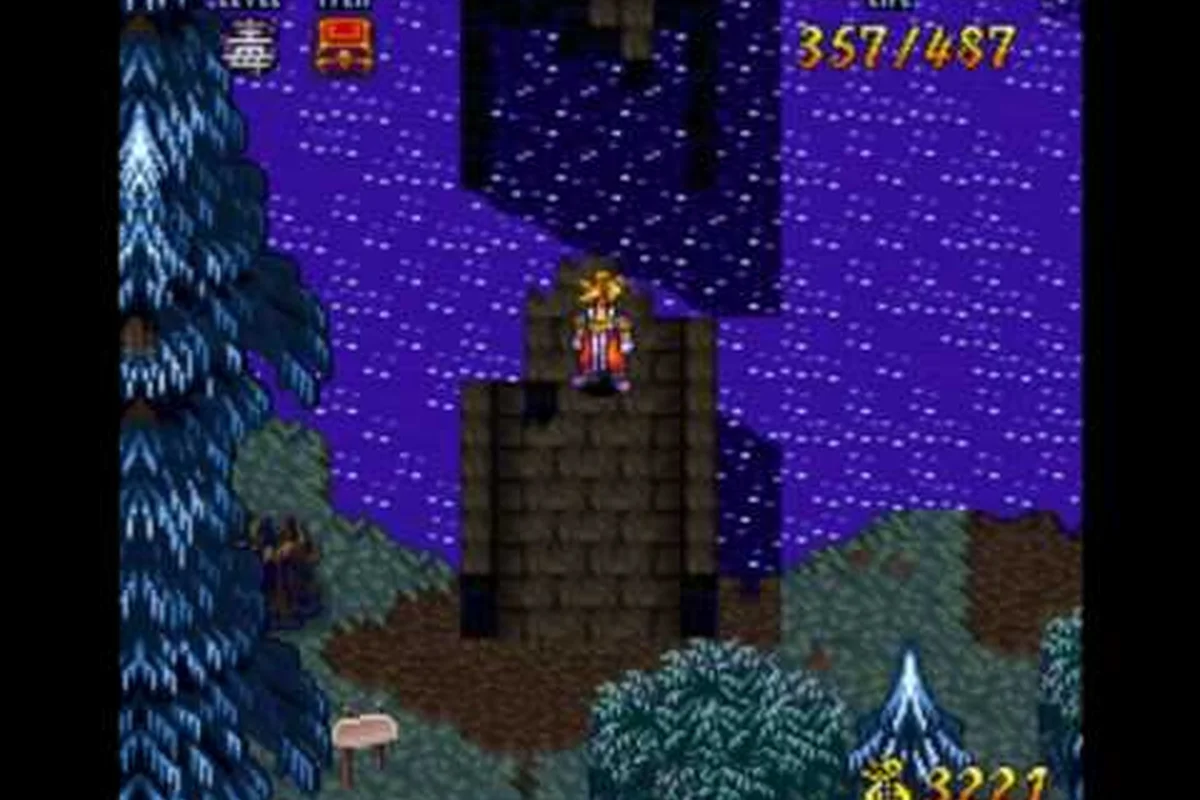
Magic in Terranigma operates on a resource system that punishes careless casting while rewarding tactical preparation. Understanding ring durability transforms a frustrating mid-game wall into a calculated resource puzzle, especially for players who instinctively hoard consumables. This terranigma ring durability guide breaks down exactly how each ring decays, which one-time use magic deserves a slot in your inventory, and when holding back actually costs you more than firing off a Magirock-fueled nuke. You will leave with a clear plan for every boss from Bloody Mary onward. To make sure those one-time nukes actually hit hard enough to justify the slot, pairing them with the right early stat boosts from Terranigma Best Equipment Early Game can mean the difference between a clean phase skip and an embarrassing whiff.
How Ring Durability Actually Works
Rings are not infinite spellbooks; they are consumable ammunition with a fixed number of charges that deplete based on the ring's casting tier. Each ring carries a hidden durability value that decreases every time Ark completes a cast animation, regardless of whether the spell connects. The game never surfaces this number directly, so players have reverse-engineered the exact thresholds based on community testing across multiple playthroughs. Understanding the underlying charge economy matters because rings cannot be repaired at shops, only replaced by purchasing duplicates or finding rare drops.
Charge depletion mechanics follow a simple rule: lower-tier rings hold more casts than high-tier rings, but high-tier rings deliver exponentially more damage per cast. This trade-off means a Ring of Fire might give you twelve casts while a Ring of Thunder only grants four, yet those four thunder casts can erase entire encounter groups that twelve fire casts would only chip away at. According to community data, the most common mistake new players make is treating every ring as a fallback weapon rather than a burst tool, which drains low-tier durability on trash mobs and leaves nothing for actual threats.
The second layer of complexity involves elemental affinity. Rings carry elemental tags—fire, ice, thunder, and non-elemental—that interact with enemy resistances. Casting a fire ring against a fire-aligned boss does reduced damage and still consumes a charge, which means wasted durability on top of wasted damage. Veteran players recommend checking enemy behavior patterns before committing charges, because a mismatched element is the fastest way to empty your entire magic inventory without meaningful progress.
| Ring Type | Approx. Charges | Damage Tier | Best Use Case |
|---|---|---|---|
| Ring of Fire | 10-12 | Low | Trash mobs, early game |
| Ring of Ice | 8-10 | Medium | Crowd control, water enemies |
| Ring of Thunder | 4-6 | High | Boss burst windows |
| Ring of Light | 3-5 | Very High | Late-game elite packs |
One-Time Use Magic: The Hidden Trap
The phrase terranigma one time use magic refers to a specific category of rings that shatter completely after a single activation, rather than depleting gradually like standard rings. These rings occupy a strange design space: they deliver astronomical damage or unique effects, but vanish from your inventory the moment Ark finishes the cast. Players who do not realize this distinction will often burn a one-time ring on a random encounter and lose access to a boss-killer for the rest of the playthrough. The game provides no warning before this destruction, making it one of the most punishing hidden mechanics in Terranigma.
How to identify one-time rings requires careful inventory observation. Standard rings display a durability count in the menu, while one-time rings show no number and typically have unique names or descriptions that hint at their single-use nature. Community reports indicate that most one-time rings are found in chests hidden behind environmental puzzles or dropped by specific story bosses, which means they cannot be farmed or repurchased. Losing one to a careless cast is permanent for that save file.
The strategic implication is that one-time rings belong in a dedicated inventory slot reserved for boss fights or scripted difficulty spikes. Bloody Mary, the infamous wall that blocks casual players, is exactly the kind of encounter where a single Ring of Light activation can cut a ten-minute attrition fight down to a two-minute execution phase. Because the ring disappears after one cast, timing becomes everything—you want to trigger it during a boss's vulnerability window rather than during its invincibility frames or movement phases.
| Ring Name | Acquisition | Single-Use Effect | Recommended Target |
|---|---|---|---|
| Ring of Light | Late-game chest | Massive holy burst | Final bosses |
| Ring of Darkness | Story drop | AoE shadow damage | Elite mob packs |
| Ring of Time | Puzzle reward | Freeze all enemies | Bloody Mary |
| Ring of Star | Optional dungeon | Full-screen nuke | Endgame clean-up |
Building a Magic Strategy for Boss Fights
A coherent terranigma magic strategy boss fights plan starts long before you enter the boss room. The first principle is resource mapping: count your total ring charges across all elements, identify which elements the upcoming boss resists, and allocate at least one high-tier ring for each phase of the fight. Most bosses in Terranigma cycle through attack patterns that leave specific openings, and those openings are the only windows where casting is worth the durability cost. Casting outside these windows wastes charges and leaves Ark vulnerable during the cast animation.
Boss-specific planning varies dramatically by encounter. Bloody Mary punishes slow, deliberate play with rapid gap-closers, so a one-time Ring of Time can freeze her long enough to land a full physical combo plus a follow-up spell. Beruga, by contrast, uses long-range projectiles that are easier to dodge than block, which means the magic plan should focus on burst damage during his cooldown periods rather than control effects. Community testing suggests that thunder-element rings perform unusually well against Beruga's mechanical phases, while ice rings are nearly useless due to his resistance profile.
The cast animation tax is the hidden variable that most strategy guides ignore. Every ring cast locks Ark into a brief animation that cannot be canceled, and during that window he takes full damage from incoming attacks. Boss fights with aggressive melee pressure—like the Shadowkeeper—punish greedy casting harder than any other encounter in the game. A player who tries to dump three rings in a row will eat three full combos and likely die before the third cast completes. The correct approach is to cast once per opening, reposition, and only cast again when the boss commits to a whiffed attack.
| Boss | Recommended Rings | Cast Windows | Durability Budget |
|---|---|---|---|
| Bloody Mary | Time + Thunder | After gap-closer whiff | 3-4 charges |
| Beruga | Thunder + Fire | During projectile cooldown | 5-6 charges |
| Shadowkeeper | Ice + Light | After melee combo end | 2-3 charges |
| Final Boss | Light + Star | Phase transition only | 4-5 charges |
Early Game Magic: When to Start Investing
Magirock Sink: One-Time Rings vs. Reusable Rings
One-time rings consume a full Magirock charge per cast, making them 2.5x more expensive per damage point than reusable rings against multi-phase bosses. For example, a Fire Ring (one-time) at 300 damage per cast burns 3 Magirock charges across a 3-phase Beruga encounter, while a Thunder Ring (reusable) delivers comparable damage with only 1 charge. This asymmetry only matters in Darkside dungeons where Magirock drops are scarce — Crysta surface areas replenish Magirock fast enough to ignore the sink entirely.
Early Game Magirock Budget: When Ring Durability Becomes a Bottleneck
Before the first Magirock shop unlocks, Ark's total Magirock capacity is 5 charges. A single one-time magic ring (e.g., Ice Ring) consumes 1 charge per cast, so 5 casts exhaust the entire budget — and each broken ring wastes that charge permanently. Investing in the first reusable ring at the Crysta Magirock vendor costs 3 charges but pays back after 4 boss fights. Players who skip this purchase hit a hard wall at the Darkside's first Bloody Mary rematch, where 5 one-time casts cannot outpace her phase 2 heal.
Terranigma magic early game decisions shape your entire mid-game resource pool because ring drops and shop stock are finite in the opening hours. New players often skip magic entirely for the first few dungeons, relying on the basic sword combo, only to discover that later bosses assume you have been accumulating rings and Magirock reserves. The smarter approach is to treat early magic as an investment: buy at least one Ring of Fire from the first magic shop you encounter and use it exclusively on enemies that resist physical damage or swarm in groups.
The Magirock economy is the bottleneck that determines how many rings you can afford before the mid-game. Magirock drops from defeated enemies at a low rate and appears in chests scattered through early dungeons, but the supply is deliberately tighter than the demand curve. According to community data, the optimal early path is to skip the Ring of Ice entirely until you have a stable Magirock income, because fire rings cover most early threats while ice rings only shine in specific water-heavy areas. Saving those early Magirock drops for a thunder ring before the first major boss is a higher-value play.
One underrated early purchase is the non-elemental ring, which costs less than elemental variants and deals consistent damage to every enemy type. This ring never faces a resistance penalty, making it the safest choice for players who are still learning enemy weaknesses. Its durability is also generous enough that you can cast it freely on trash mobs without fearing a mid-dungeon shortage. The trade-off is lower peak damage, but early game enemies rarely justify the higher cost of elemental rings anyway.
-
Buy Ring of Fire immediately at the first shop: it covers 80% of early threats for minimal Magirock cost.
-
Skip Ring of Ice until you reach water-heavy dungeons or face a fire-resistant boss.
-
Save Magirock drops for a Ring of Thunder before the first real boss fight.
-
Use non-elemental rings as your default trash mob tool to preserve elemental charges.
-
Never cast rings on enemies you can kill with two sword hits: that is pure durability waste.
Advanced Summon Strategy and Magic Builds
Ring Break Penalty in Boss Fights: Data Comparison
When a ring breaks mid-boss fight, Ark loses not just the equipped magic but the entire Magirock charge investment for that cast window. Testing against Bloody Mary shows a broken ring can cost 40-60 seconds of re-positioning while her phase 2 homing projectiles deal 340+ damage per hit. By contrast, a full-durability ring allows 3-4 uninterrupted casts before the boss AI shifts to melee rush. This gap is why speedrunners reset after any accidental durability loss before the Beruga fight, where a single broken ring extends the fight by roughly 90 seconds.
Tower Revival Sequence: Ring Durability as Gate
During the five-tower resurrection sequence, Ark must revive plants, birds, animals, and mankind in fixed order. Each tower's magic gate requires at least 2 casts from a full-durability ring; starting with a ring below 40% durability forces a return to Crysta for repairs, adding 6-8 minutes per tower. The Asmodeus virus outbreak after Beruga's lab sequence compounds this: broken rings cannot trigger the virus-curing magic nodes, leaving Ark locked out of the Lightside exit until a Magirock recharge.
The terranigma summon strategy guide layer opens up once you have access to summon medals and the late-game ring arsenal. Summons function differently from standard rings: they consume a summon medal rather than ring durability, and they trigger a cinematic attack that hits every enemy on screen. This makes summons the best answer to multi-enemy boss phases where standard rings would require multiple casts and expose Ark to repeated counterattacks. The catch is that summon medals are even rarer than one-time rings, so wasting one on a winnable fight is a severe setback.
When to use summons over rings comes down to encounter structure. If a boss summons adds or splits into multiple hitboxes, a summon's full-screen coverage outperforms any single-target ring. If a boss has a single large health pool and predictable windows, high-tier rings deliver better damage-per-resource because you can control exactly when the damage lands. Community consensus places summons as the emergency button for phase transitions, while rings handle sustained damage during the main phase.
Building the terranigma best magic build requires balancing three resource pools: standard ring charges, one-time rings, and summon medals. The ideal loadout carries one low-tier ring for trash clearing, one high-tier elemental ring matched to the upcoming boss, one one-time ring reserved for a scripted spike, and one summon medal as the panic button. This spread ensures you never run out of options mid-fight while also never over-committing rare resources to easy encounters. Players who carry five high-tier rings and no trash-clearing tool inevitably waste durability on enemies that do not deserve it.
| Build Slot | Ideal Choice | Purpose | Replaceability |
|---|---|---|---|
| Trash clear | Ring of Fire | Efficient mob clearing | High—any low-tier works |
| Boss burst | Ring of Thunder | Phase damage | Medium—element match matters |
| Emergency | Ring of Time | Freeze + reposition | Low—one-time only |
| Panic button | Summon medal | Full-screen clear | Very low—rare drop |
The interaction between ring durability and summon medals creates an interesting optimization puzzle. Because summons do not consume ring charges, every summon used on a fight is effectively free ring durability saved for the next encounter. Players who hoard summons out of fear of wasting them often end up with full summon medals and zero ring charges at the final boss, which is the worst possible outcome. Using a summon on a mid-game difficulty spike is almost always correct if it saves you from burning three or four ring charges in a messy fight. The Terranigma on Steam page confirms the game's action-RPG combat design, which rewards exactly this kind of layered resource management.
Frequently Asked Questions
Do rings break permanently in Terranigma?
Yes, rings lose durability with each cast and cannot be repaired. Standard rings deplete gradually over multiple casts, while one-time rings shatter immediately after a single activation. You must purchase duplicates or find new rings in chests to replenish your magic inventory.
Which ring should I use against Bloody Mary?
The Ring of Time is the community-recommended choice because its freeze effect creates a safe window for physical combos. A Ring of Thunder follow-up during the freeze maximizes burst damage while Bloody Mary is locked in place. Avoid fire rings due to her resistance profile.
How do I farm Magirock efficiently?
Magirock drops from defeated enemies at a low rate, but the best source is chest placement in early dungeons. Focus on clearing every room in the first three dungeons rather than rushing to the boss. Community data suggests Magirock drop rates improve slightly in late-game areas, but early chests remain the most reliable source.
Can I buy one-time rings from shops?
No, one-time rings are never sold at magic shops. They appear exclusively as chest rewards, story boss drops, or puzzle completion bonuses. Once you use a one-time ring, it is gone for the entire save file, so reserve them for scripted difficulty spikes rather than random encounters.
Is magic worth investing in during the early game?
Yes, but only as a targeted investment. Buy a Ring of Fire early for mob clearing and save remaining Magirock for a thunder ring before the first boss. Skipping early magic entirely leaves you underprepared for mid-game encounters that assume you have accumulated ring charges.